Theme Layout

Boxed or Wide or Framed

Theme Translation

Display Featured Slider

Featured Slider Styles

[Centred][caption2]

Display Grid Slider

Grid Slider Styles

[style5]

Display Trending Posts

No

Display Author Bio

No

Display Instagram Footer

yes

Archive

© 2015 mo'adore | Content and design by Morag Lee | Powered by Blogger.

Showing posts with label feminism. Show all posts
I prefer my International Women's Day served radical, but cutesy Instagrams are nice

I prefer my International Women's Day served radical, but cutesy Instagrams are nice


Illustration by Camila Rosa

Today is International Women's Day. Which you would think would be my favourite day of the year. But, meh. Can take or leave it.

I'm going to sound like an anti-capitalist hag (which I am) but it's commercialised and lost a lot of its original feminist meaning.

According to Wikipedia:

"After women gained suffrage in Soviet Russia in 1917, March 8 became a national holiday there. The day was then predominantly celebrated by the socialist movement and communist countries until it was adopted in 1975 by the United Nations."

Today I've seen a lot of memes, inspirational quotes, and people laughing at Richard Herring. A lot of it is fluffy. A lot of it is posted by brands looking for more engagement on social media. A lot of it is not really inciting any actual change or recognising the big fight we still have on our hands.

I am 100% a believer that fluffy pop-culture feminism has its place. It's great at catching people's attention and creates a non-threatening introduction to social justice. Just as much as you shouldn't teach someone to read with a copy of Wuthering Heights, when you're introducing someone to left-wing politics you start with something like fairer taxes, or free higher education. You probably shouldn't storm in there with "most crime is created by inequality and prison is shit, sex work is real work, meat is murder, white people shouldn't wear dreads, and if you're a white, straight, male you probably have done some oppressive shit in your time. Oh, and I'm going to spit on you because you don't know what demisexual or polyamorous means".

That would scare people, and you don't change people's mind by making them feel stupid or defensive.

I might be a pure radical lefty now, but I started out a centrist. I even voted Liberal Democrats once upon a time ahahahahahahahah. Oh, my.

But I grew and learned and I'm here. Heck, I accept that I probably still have blind spots. And that's why I read about 5 non-fiction books a month trying to unlearn oppressive shit.

While fluffy feminism is a great introduction, that's where its usefulness ends. If we want to really pull down the shackles and dismantle patriarchy, we have to get radical. That means education, organisation, and tackling all kinds of oppression (because they interlinked).

One of my favourite internet people Sophie worded it perfectly:

Fluffy pop-culture feminism rarely covers any issue that doesn't relate to white, middle-class, heterosexual, thin, monogamous, cis-gendered women. Not saying that issues such as childcare, short skirts, women in sport, or leadership opportunities for university educated women aren't important - but they only scratch the surface and already receive a lot of airtime.

I've said this before, and I'll say it again: if your social justice activism only focuses on issues that affect you, then you're doing it wrong (read my review of Hot Feminist, where I originally touched upon this).

That means giving a shit about issues that might affect lots of other women but not yourself. If we want the men to take our issues seriously (because every social justice movement needs allies with privilege) then we need to take the issues that affect under-represented groups of women seriously. Read a memoir by a woman of colour. Ask people their pronouns instead of assuming. Remember that bisexuals exist. Respect someone's right to be fat. Donate money to a charity that supports sex work. Stop judging young mums. Share an article by a disabled woman. Say fuck you to capitalism.

Sharing a cutesy quote on Instagram about girls supporting girls isn't really doing anything.

I'm a big fan of the saying "the personal is political" and this is my favourite analysis of its meaning is (also from Wikipedia):

"The personal reflects the political status quo (with the implication that the personal should be examined to provide insight into the political); the personal serves the political status quo; one can make personal choices in response to or protest against the political status quo; ... one's personal choices reveal or reflect one's personal politics; one should make personal choices that are consistent with one's personal politics; personal life and personal politics are indistinguishable."

To me, social justice slips into every area of my life. From always voting for a left-wing party. To only being friends with people who share my political values. To boycotting beauty brands that test on animals. To my commitment to using non-violent communication in my personal relationships. Even just being nice to waiting staff. And definitely my decision to be vulnerable on the internet and share my stories.

All while also recognising that some of these decisions can only be made thanks to my privilege as a middle-class, white, university-educated, cis-gendered woman.

A big part of finding your own place in the social justice movement is recognising your own privilege and knowing when to sit the fuck down. Supporting trans women does not means speaking over the top of trans women. It means listening to their stories, amplifying their voices, and not using slurs (and probably other stuff too, I'm not an expert). You'll never see me write a blog on trans issues (or any issue that doesn't affect me) because what the fuck do I know about trans issues? I'd just be another cis-gendered woman clogging up the conversation.

And it means challenging yourself. This is the part where a lot of people get defensive. Changing the world does not mean shouting about how shit everyone else is and acting like your shit don't stink. We've all been subjected to the same social conditioning, albeit some more than others, so we hold oppressive views and have done oppressive stuff. I've dressed up as a Native American for Halloween, I used to judge fat people, and I got weirdly angry about teen mums. I have zero time for social justice warriors who can't admit their own problematic bullshit. It's political Nice Guy Syndrome.

I became the woke bitch I am through years of active unlearning, reading a fuck ton of feminist non-fiction, and calling out my own bullshit.

In other words: I wasn't born this way, baby.

I know this blog won't win me many party invites. But I'm not here for those anyway. It's the revolution I want an invitation to. Or I'll just turn up. But, what I know is that the path to the revolution isn't lined by pink glitter and corporate slogans of female empowerment. It's dirty, and it's uncomfortable. It might make you cry and shake with anger. But I think there's an Instagram quote somewhere that a rainbow only shines after rain?! Something like that.

Today, on International Women's Day do one thing to initiate radical change - whether it's within yourself or for the wider world. The patriarchy won't dismantle itself, no matter how many cutesy Instagram quotes you share.

Peace x
Read more
mòrag
0 Comments
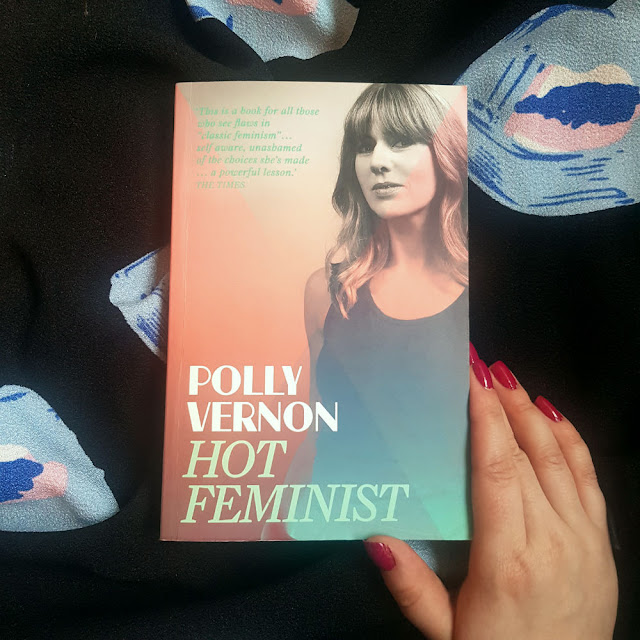
It's my turn to lay into Hot Feminist by Polly Vernon (and I've including an anecdote on assault, because I like to entertain)

It's my turn to lay into Hot Feminist by Polly Vernon (and I've including an anecdote on assault, because I like to entertain)


Despite my status as a bookworm, I've never written a full review of a book on my blog. I post them often on my Instagram and on my GoodReads account. But my blog? Nah. I usually only require two paragraphs to say what I need to say and to provide other bookworms an indication on whether that book is something they need in their life or not.

Then along came Hot Feminist by Polly Vernon. Boy, do I have some opinions that won't fit into a Instagram caption.

If you're not familiar with the title: it caused a big stir when it was released. The premise of the book is that women can give a shit about their appearance while still fighting the patriarchy (fair enough). Polly was accused of being a middle-class, white women who had her head in the clouds with no understanding of 'real' feminist issues (also: fair enough, but we'll get to that). She was then subjected to quite a bit of hate on Twitter (never ever fair enough, respected debate is welcome but vilifying someone for a book is not something I can get behind).

I was drawn to this book because I am a firm believer that feminine and feminist are not mutually exclusive. I for one will definitely be at the revolution, and I will be bringing my winged eyeliner and lipgloss with me. Saying that, feminine women do sit in a privileged position above, say, butches or tomboys. More masculine women challenge the status quo simply by existing. Femme women? Yeah, not as much. While we do face some unique problems (street harassment and, if you're a queer femme-woman like myself, erasure of an important part of your identity) liking make-up is hardly revolutionary act within itself (but women who like make-up can still be revolutionary in other ways).

I hoped Polly's book would expand on the ideas I briefly introduced above with research and anecdotes. Maybe interview a feminist scholar? Or a handful of femme women? Maybe even a femme women who identifies as queer? Or a trans woman?

Perhaps an analysis of marketing techniques wielded by the global beauty industry? Or a history of how lipstick came to be?

No, it was pretty much just a personal rant about not wanting her own personal experiences and definition of feminism challenged.

Here's the thing about social justice: it's not just about you. That's not how it works. Yes, you'll have your pet issues that are probably fuelled by personal hardship (like me banging on about bisexual issues, or how awful men are on Tinder). But in order to actually fucking change the world, you need to think bigger picture and actually give a shit about issues that have fuck all affect on you. Otherwise, your fight is for nothing. Or we only end up fixing issues that impact middle-class, white, feminine women.

I was once a feminist who couldn't see past her own experiences. I think most of us probably were at some point. It took me ages to get around the whole white-people-not-being-allowed-to-have-dreads thing. There are probably still a lot of other things I say and do that are oppressive as shit, but these days I do stop to listen to the experiences of others. And if I was going to write a book about feminism I'd sure as hell have some other people from different backgrounds look over it before I sent it off to bookshops. Or maybe I wouldn't write it; as we already have enough books written about the struggle of middle-class, white women.

Polly even ends up in cultural appropriation territory twice, and mis-uses the term OCD. Not encouraging people to view other cultures as fashion inspiration and not being a dick about mental health is Social Justice 101.

She also doesn't use trigger warnings.

But I do. So here is one big trigger warning for sexual assault and emotional abuse.

[TRIGGER WARNING]

Polly Vernon speaks openly about an assault made on her when she was a teenager and the way it impacted her. She also touches upon an emotionally abusive relationship. She doesn't go into detail about the second one, but that's okay because people shouldn't be forced to share their stories if they're not comfortable (or safe) doing so.

This chapter was fabulous and was one of the best discussions around sexual assault that I've read (even if it didn't start with a trigger warning).

The reason it was one of the best chapters in the book and entire fucking world was that it included all assault. No assault is worse than another. It hit me hard because it's one of the few times where I feel as though my experience of assault is included and accepted.

I've never spoken openly about my experience of sexual assault. But I'm a women, so you had probably guessed I must have had a story tucked away somewhere.

I've been subjected to the usual groping in nightclubs, been called a whore for not accepting a drink, and even had a male 'friend' make up rumours that we were getting close so other men would stay away from me (that was a fun time). I mean, if I won't love him then I'm not allowed to love anyone.

But I came out unscathed and had no lasting emotional wounds.

However, I do have an experience that still makes me skin crawl and has made me permanently more cautious on the dating market.

I'm not going to publish a moment-by-moment recount. Maybe I will one day, if I feel brave enough. But I'm going to touch upon it enough so that you understand why I normally don't feel included in the discussion or why pop culture doesn't ever portray sexual assault in a way that brings about flashbacks.

  • It wasn't violent
  • It was someone I was actively dating
  • It was someone I had been friends with first, and trusted
  • It wasn't an arrogant jock, but a nerd
  • He wasn't tall or muscular, I could have put up a physical fight
  • It was in my flat, I had the territorial control
  • I wasn't drunk or under the influence
  • I was conscious
  • I explicitly said no
  • But that explicit no was to an act within sex
  • Not only did we have an active sexual relationship, but we were having sex at the time
  • A sex act that is mainstream, and one that men get praised for when they do (you know what I'm talking about, surely). 
  • I just froze and my mind went blank
  • I even continued dating him
I spent the next year of my life living in skin that was constantly crawling. I was frustrated. Angry. I had negative emotions that I didn't know how to deal with. But I internalised it. I still thought that I should have repeated my no. Or punched him. Or not had sex at all that night. It took me a year to have my moment where I realised none of what happened had been my fault. That I froze up and couldn't make sense of what was happening (never mind muster up a comeback). All the blame lies with him. He ignored a verbal no. That is not grey area. That is not 'could have read between the lines better' or 'be less creepy in a nightclub'. That is assault.

But despite that, I still feel like my story doesn't count. That some people have it worse. That some people never heal. That some people never have sex again. That some people got asked what they were wearing or why they drank so much. That they were violently attacked by a man jumping out an alleyway.

It's probably because I've never watched a sexual assault story line that depicts what I experienced. I even ignore content and trigger warnings because I'm never impacted by assault on the telly. My assault was quite mundane, and probably wouldn't make good telly.

But Polly's writing did hit hard. Because it included my story. Okay, not my actual story because this is the first time I've publicly shared it, but it felt like if she was going to curate a book with sexual assault stories from various women, she would allow mine to be included.

[End Trigger Warning]

She also says intelligent things about how we end sexual assault and rape. It's not about tougher sentencing, or changing the law. It's hard to win a sexual assault case because it comes down to one person's experience versus another. Some people who have committed sexual assault don't even realise they've done so because society still can't make up its collective mind about what consent actually is.

Personally, I think consent should be this. Communicate with your partner, even if it's a super casual thing. Don't act like some sex acts are better than others, or even that some sex acts are 'feminist'. Respect that sexual pleasure is a very personal thing, and that your new partner might not like getting fucked exactly the same way your ex did. Learn to read between the lines and recognise when someone isn't moaning or screaming in pleasure. Check in with them. Know the difference between someone who has had one or two drinks, and someone who has had an entire bottle of wine. Don't bring anything new into the bedroom without having a discussion about it first, while fully clothed. Understand that women have been programmed socially to be people-pleasers and struggle with the word no, and that shit is hard to unlearn. Realise that sleeping people can't give consent. And that consent can be withdrawn at anytime. Don't coerce either, that is also bad.

Is that really too much to ask for?

So, do I recommend Hot Feminist by Polly Vernon? No, not really. While I'm happy to photocopy that one chapter and plaster it around town until we all agree on what assault is and isn't, I won't recommend wasting your breath on the rest of the book. Save yourself a headache.
Read more
mòrag
0 Comments
Is Tracy Flick a feminist?

Is Tracy Flick a feminist?


If you've spoken to me in the last two months about films, you'll know I'm going through a 90s phase. Specifically, films aimed at 90s teenagers who I was born a decade later than.

One of those films was Election. A 1999 dark comedy starring Matthew Broderick and a young Reese Witherperson as they fight their way through a high school election. Tracy Flick, Witherspoon's character and main antagonist, is that high school brown-noser we have all known. She is top of her class, always shoves her hand up first, is involved in multiple extra-curricular activities and feels entitled to success. She also struggles to make friends because no one can stand her.

We have all known a Tracy Flick


She's a character that is definitely interesting from a feminist angle, and I could feel my brain performing some critical analysis while I was listening. Turns out I'm not the only one. Even though the film was released before the internet was mainstream, many articles have been written on her character, posing the same question I'm asking with this blog. Journalists even compared her to Hillary Clinton (and Chris Klein's character, Paul, to Barrack Obama - more on that later). This is even despite the film being a box office bomb (but acclaimed by critics).

Tracy definitely wasn't scared of any glass ceiling. Which sadly, even in 2017, is still something to applaud and admire. She worked out the value of hard work very young, thanks to an encouraging (even slightly zealous) mother. I didn't do badly in school, but I definitely could have applied myself more than I did and taken a leaf out of Tracy's book. She was willing to go above and beyond to get good grades and plump out her college application - embarrassingly I didn't realise that a willingness to go the extra mile was one of the secrets to success until I started full-time work. We can learn a lot from the ambitious Tracy's of the world.

But reading all the required texts and putting 120% in every essay she wrote wasn't the only tactic Tracy was using. Tracy was also felt entitled to success and was willing to stick her elbows out to get it (sh'd be a textbook Capitalist Feminist). When she first finds out that Paul Metzler is running against her (she was previously running unopposed) she storms over to his election table and demands to know why. We see clips of her in the classroom where she isn't allowing other students the chance to speak. If you've seen the film, you'll know the scene where she rips down her opponents posters in the school halls in a fit of rage. All because two people chose to run against her.

I want to live in a world where women get ahead as equally and easily as men. I'm under no illusion that this is not yet the case. But I also want to live in world where people get ahead and promoted based on talent and hard work - and not because they ripped down someone else's campaign posters or stuck a straw up the manager's ass.

Tracy is also a job snob 

This quote probably sums up her attitude perfectly:

Now that I have more life experience, I feel sorry for Mr. McAllister. I mean, anyone who's stuck in the same little room, wearing the same stupid clothes, saying the exact same things year after year for his whole life, while his students go on to good colleges, move to big cities and do great things and make loads of money... He's got to be at least a little jealous. 

Since when is teaching seen as a low-level job? It requires a lot of training and is an important role that society requires. Ambitious Tracy types require good educators to get the ball rolling. As I get older and have more life experience, I've become even more disconnected with the idea that there are "real job" and "jobs". Or that being an underachiever or non-ambitious is a bad character trait.

We also see her at the end of the film working with a politician: a Republican no less. Ahem.

But let's take a step back from looking at Tracy as an individual and look at her place in wider society - and how that society influences her behaviour. Sexism still exists in schools and workplaces, and women do need to fight harder to be heard and get ahead. Tracy perhaps knew this and adjusted her behaviour to suit. Here is another quote from the film:

You might think it upset me that Paul Metzler had decided to run against me, but nothing could be further from the truth. He was no competition for me, it was like apples and oranges. I had to work a little harder, that's all. You see, I believe in the voters. They understand that elections aren't just popularity contests. They know this country was built by people just like me who work very hard and don't have everything handed to them on a silver spoon. Not like some rich kids who everybody likes because their fathers own Metzler Cement and give them trucks on their 16th birthday and throw them big parties all the time. No, they don't ever have to work for anything. They think they can just, all of a sudden, one day out of the blue, waltz right in with no qualifications whatsoever and try to take away what other people have worked for VERY, VERY hard for their entire lives! No, didn't bother me at all!

While this quote also demonstrates how self-entitled Tracy is, it shows how socially aware she is. She recognises that not everyone is born equal and how successful someone becomes is largely down to accident of birth. I'll speak more on Paul Metzler later, but he wasn't very ambitious but was a likeable good-looking white guy from a rich family - the demographic that gets a head start as soon as they're born.

Then there is the capitalism system that we work within. It encourages a survival of the fittest mentality, so it's no surprise people sharpen their elbows for success. Especially if they belong to a disenfranchised group.

Remember, this film was made in 1997 long before feminism and social justice were mainstream topics. Tracy was already recognising inequality that wouldn't get widely spoken about until two decades later. Girl was ahead of her time - and a little feminist shall I say.

But she isn't the only character worth speaking about from a feminist angle 


Throughout the film Broderick's character, Jim, tries to sabotage her election (and future career) success. He's otherwise popular with the students, but he has a long term grudge against Tracy. Part of this is because she's annoying. But the other part is her student-teacher affair with Jim's best friend, Dave. Dave lost his job and wife because of the affair but Tracy got off unharmed and her involvement in the scandal remained a secret.

Statutory rape is statutory rape. Tracy may have been a willing participant (as it was depicted in the film) but teachers shouldn't be finding students who haven't finished puberty attractive. It's not said on camera, but Dave looked like he was in the late 30s or early 40s - what on earth someone in that age bracket would find attractive in a teenager I do not know.

Jim then goes on a mission to ruin Tracy's future. He is the one who talks popular Paul into running in the first place. He even throws away pro-Tracy ballot papers so that Paul can win the election. I don't like Tracy Flicks as much as the next Jim, but I've never tried to stop one from getting ahead. By trying to sabotage her election chances he was proving himself to not be any better than her.

And then there's Paul Metzler (said I'd eventually get to him) 


He is a popular jock guy. Genuinely lovely student. He would make a great boyfriend. But class president? Not so sure. He's that male who gets ahead and is well liked just by being present. Though, despite not being as ambitious or hard-working as Tracy, he certainly has much better people skills. Anyone who was ever went outside their house to navigate high school and adult offices knows that good interpersonal skills are also a major factor in how well you'll do in life (both professionally and socially).

The media compared Barrack Obama to Paul Metzeler in 2008. Obama is definitely likeable and probably does have a better moral compass than most other politicians, but he wasn't exactly experienced when he first ran for President. Hilary Clinton (and even Sarah Palin) was definitely more qualified.

But my favourite character in the whole thing? Paul's sister, Tammy. She also runs for Class President to spite her secret ex-lover, Lisa, who starts dating Paul and becomes his campaign manager (that's one awkward love triangle, though Paul isn't aware).


Because she's right. My experience of pupil councils at school (I was even on it during my fourth year) is that they don't really change anything and people only run to impress universities. I wasn't that heavily involved in school extra-curricular activities but I was heavily involved in societies at university - and I'm not even going to deny that I was looking for CV boosters (and a way to avoid coursework).

Honestly, Tammy Metzler is probably the only feminist role model in the entire film (in a weird way).

Read more
mòrag
0 Comments
Ann Frank House: more than a museum

Ann Frank House: more than a museum


I've been wanting to see the Ann Frank House since I was little. 

I'm not sure how little, but I imagine probably about the time World War 2 was chosen as our class project in primary school. In the Easter of 2002 on a family trip to Florida we had a stop-over in Amsterdam airport and I pleaded with my mum to take a trip out to visit Ann Frank's House. My eleven year old self didn't quite understand how airport stop-overs worked yet. 

Fast forward to my twenty-fifth year on earth and I finally got to climb the stairs of the attic myself on my recent trip to Amsterdam. 

When people ask me if I enjoyed the museum or what it was like, I'm not entirely sure how to answer. Most museums could be described as "nice", "lovely" and "enjoyable". While it was interesting and I agree standing in the long queue was worth it, the usual adjectives to describe museums just don't feel right. I'd honestly maybe say it was 'creepy' and 'eerie' walking round the former hideout of a discriminated group of individuals during a historical event that shows just how much further society still has to go. It even felt odd that something like this should actually be a tourist attraction at all. 

I don't even think me and Hayley even muttered a word to each other as we walked through the corridors of the former hideout. With all furniture removed at the request of Otto Frank the rooms feel bare and haunted. I'm not even sure if I heard any of the other visitors even whisper to each other.

Moving out of the attic and into the museum, you can feel tension coming undone and visitors begin to pass verbal cues to one another again. This, however, was also the part where I began to act up emotionally. The attic itself was eery but it also fails to feel....real. As in no way did eight people manage to hide here for two years? It's back in the museum where you learn more about the story and see the official artefacts (including the diary itself) that it began to dawn on me that Ann Franks Diary wasn't just a book.

It was real life. On top of that it was also a sociological commentary. It was a story of how dark society can get when we don't fight discrimination. It was a memoir of what it's like to be part of a marginalised group who actually had to go into fucking hiding. It's a reminder as to why social justice warriors and activists do what they do. The museum even explicitly says that the ideologies and political beliefs that led to these events are not yet dead and still hover at the fringes of society (or even subliminally in mainstream media). 

It could happen again.

In clips of Otto Frank - Anne's father, the sole survivor - discussing his decision to publish his daughter's diary and open the museum, it becomes clear that this is the message he wanted to get across. He was honouring his daughter's wishes, but he also wanted to crack down on the lack of humanity within society that meant the diary ever had to exist in the first place. 

The last part of the museum shows a film where people say what the diary means to them. The actress Emma Thompson appeared and it was her quote that hit me and I chose for my Instagram of the Anne Frank statue

"Her would-haves are our opportunities".

Anne wanted to change the world post-war and fight the beliefs that put her into hiding with her diary as solace. She also wanted to become a world-famous writer. Which she did go on to achieve, but didn't survive the war to witness her diary become one of the best-selling pieces of literature ever.

And as that piece of information surrounded me, I felt myself act up again. 


Morag x
Read more
mòrag
3 Comments

RSSGoogle Friend ConnectBloglovinFeedly

Follow moadore on Snapchat!

Recipes, love letters and general chit chat can be sent to moadore@gmail.com.

Follow @moadore